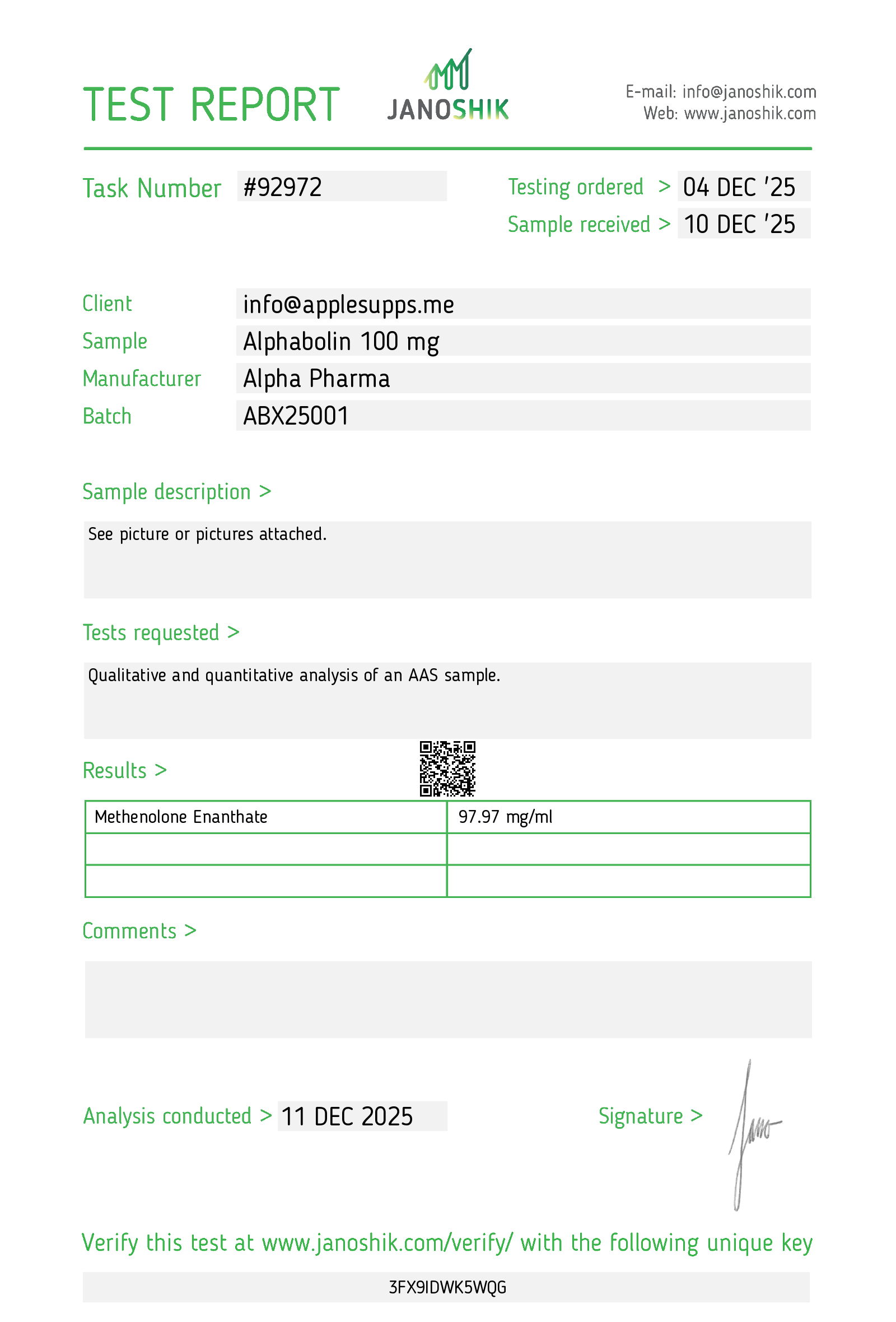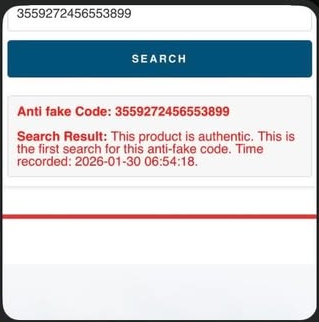
Right now, somewhere in your stack, there is a vial that contains less than half of what the label claims. You are taking it on schedule. You are paying for it in full. And nothing about its appearance, its packaging, or its price tag will tell you that you have been running a half-dose protocol for months. This is not a manufacturing error. This is not a rogue batch. This is the default state of the UK performance supplement market — and it has been for years.
I have spent the last two years working with independent testing facilities to track what athletes are actually receiving when they order online. The pattern was consistent enough — and expensive enough for the people on the wrong end of it — that I felt obligated to document it. What I found is that the people most affected by this are not the corner-cutters. They are the careful ones. The ones who pay full price expecting full product.
What follows is not a product review. It is not sponsored content. It is an explanation of why the number on a label and the amount in a product are two different things in this market — and what the athletes who have quietly worked this out are doing instead. If you are taking this seriously, you cannot afford to get this part wrong.
You Are Paying for a Dose You Are Not Getting
of performance supplements independently tested from UK-based suppliers were found to contain significantly less active compound than labelled — with some products measuring as low as 30% of stated concentration. Analysis conducted 2022–2024 across three European testing facilities.
| What you're testing for | Underground Lab | Pharmaceutical-Grade |
|---|---|---|
| Third-party COA per batch | ✗ | ✓ |
| Stated purity confirmed | ✗ Self-reported | ✓ Independent lab |
| Typical real-world purity | 40 – 70% | 98 – 99.9% |
| Batch number tracking | ✗ | ✓ |
| Heavy metal screening | ✗ | ✓ |
| Label dose vs actual dose | Often 30–60% of label | Within ±2–10% of label |
| International shipping | Inconsistent | ✓ Worldwide |
If a product is 40% of its stated concentration, you are not buying a weaker version of the same thing. You are buying something else entirely — at the same price, on the same schedule, with the same expectations. Your protocol is fiction. Your results — or the absence of them — are measuring something other than what you thought you were measuring. Every week of that run was a week you cannot get back.
Think about what that means in practical terms. The plateau you have been working through. The progress you assumed would have arrived by now. The "maybe I should bump it up" conversation you had with yourself last week. None of it was about your training. None of it was about your genetics. It was about a label number that did not match the product. Until you fix the source, you are not running a protocol. You are guessing.
And this is not a problem confined to the cheap end. Premium-priced supplements from well-presented UK distributors routinely test below label. The underdosing is invisible. You cannot taste it. You cannot see it. You cannot feel it. The only way you ever find out is when you switch to a verified source and notice — sometimes within the first week — that your body is responding to a different number than the one you were reading on the label.
By then you have spent months and hundreds of pounds running a protocol that was never what you thought it was. This is the default state of the UK market. It has been for years. If you are going to do this, you have to do it correctly — and that starts with knowing exactly what is in the bottle.
Why Most Brands Get Away With It
The UK supplement industry is not meaningfully regulated at the performance end. There is no government body with enforcement teeth requiring third-party testing for this category of product. Brands can print whatever they like on a label. They can call something pharmaceutical-grade without any obligation to prove it. There is no penalty for the gap between the label and the product — because there is no inspection to find that gap.
In nine years covering this industry, I have seen athletes spend thousands on products that were never what the label claimed. The testing gap is the dirty secret nobody has financial incentive to close.
— Independent industry source, off the record
The incentive structure points one direction: import cheaply from unverified synthesis operations, repackage, sell. A producer who invests in third-party testing on every batch is spending money their competitors are not. That cost differential either compresses their margin or raises their price — both of which put them at a disadvantage in a market that largely competes on price alone.
The producers who test anyway do it for one reason: their customers will not tolerate not knowing.
- ✗ No batch number
- ✗ No COA available
- ✗ Purity unknown
- ✗ Unknown additives
- ✓ Batch tracked
- ✓ COA on request
- ✓ 99.4% verified purity
- ✓ No unknowns
The athletes who figured this out are not talking publicly.
DM "SOURCE" on WhatsApp to get access to the same supply chain used by IFBB overall title holders.
DM "SOURCE" on WhatsAppWhat Third-Party Testing Actually Means
A Certificate of Analysis (COA) is a document issued by an independent laboratory confirming the identity and concentration of a compound. It is not a marketing claim. It is not an internal audit. It is a document produced by a third party with no financial stake in the outcome — and it either matches the label or it does not.
Demand to see one. If a supplier cannot produce a COA tied to a specific batch number, you have no idea what you are buying. Not less certainty. No idea.
Pharmaceutical-grade synthesis — the production standard that governs prescription-grade manufacturing — operates under a completely different set of requirements than an unverified operation filling capsules in an unregulated facility. The purity difference between these two endpoints is not marginal. It determines whether the compound is what the label states at the concentration claimed, free from heavy metal contamination, degradation products, and synthesis residues.
The question is not whether pharmaceutical-grade products exist in the UK market. They do. The question is whether you know how to find them — and whether you are paying accordingly.
How IFBB Overall Title Holders Source Differently
Athletes competing at IFBB overall level are not using the same supply chain you find through a Google search. They never have. The stakes — years of training, competitive eligibility, reputation — require a different standard of verification. They have sources. Those sources rarely advertise. They exist on referral and on a track record that can be checked.
Over the course of reporting this piece, I was connected to one such source by multiple athletes I have worked with over the years. What made it unusual was not the product range — it was the documentation. Every batch. Independent laboratory. Certificate available on request, tied to a specific batch number. Not a generic marketing document. An actual COA you can verify against the batch you received.
The supplier ships internationally — UK, Europe, North America, Australia, and beyond. Packaging arrives with no identifying markings. The price point is higher than what you would find from an uncertified distributor — because pharmaceutical synthesis costs more than the alternative. That gap in price is the gap between knowing exactly what you are taking and not knowing at all.
Three athletes I spoke to — all IFBB overall title holders in the past eighteen months — confirmed they have used this source throughout their competition prep. Most are not named publicly at their request. The exception is below.
J. Buranapawung
IFBB Heritage Classic — Bikini Fitness Open Overall Winner
An IFBB-level athlete who switched to verified-source supply during competition prep. Wins at this level are decided on conditioning that does not tolerate a label number that is wrong. Photographed on stage with the overall winner trophy.
All of them offered the same advice: stop buying on price. Start buying on documentation.